



Who Wins: Telegram Gifts or Counter-Strike Skins?
The digital collectibles landscape is evolving faster than ever. A few years ago, in-game skins were the main form of digital ownership. Today, a new player has entered the arena — Telegram gifts, integrated directly into the world’s fastest-growing messenger. Both ecosystems represent massive opportunities, yet they differ sharply in structure, audience, and long-term potential.
The Counter-Strike Skin Market: Scale and Stability 
Skins in Counter-Strike have existed since 2013 and have grown into a multibillion-dollar digital economy. Players purchase cosmetic items — knives, gloves, and weapon finishes — not for gameplay advantages, but for style, rarity, and prestige. In 2025, the global CS skin market is estimated at $4.5–5 billion, with some ultra-rare items selling for tens of thousands of dollars on specialized marketplaces.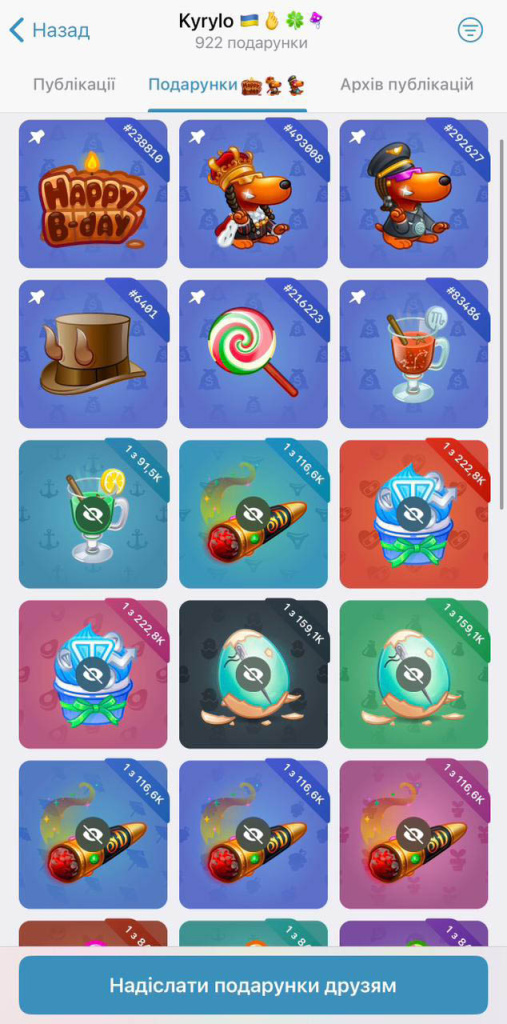
However, this market is entirely centralized. All transactions happen inside Valve’s Steam ecosystem, which dictates every rule: trading limits, commissions, and withdrawal policies. A single policy update can shift the entire market overnight. For example, the introduction of Trade Protection in 2025 caused a market value drop of roughly $600 million in a week.
Despite such risks, CS2 skins maintain high liquidity. Traders can sell or buy items within minutes, and the marketplace has matured into a full-fledged financial ecosystem involving speculation, arbitrage, and long-term collecting.
Telegram Gifts: The New Frontier of Digital Culture
Telegram introduced gifts at the end of 2024 — initially as animated digital tokens users could send to each other. But in 2025, the platform took a major leap: gifts could now be upgraded into collectible NFTs. These tokens are minted on the TON blockchain and traded via Telegram’s own marketplace, Fragment.This innovation merged social interaction with blockchain ownership. Every gift has unique attributes and limited edition runs. Rare collections can gain substantial value over time, and Telegram’s integration with Stars — its internal currency — makes the entire process seamless for users with no crypto background.
The biggest advantage lies in scale: over 1 billion active Telegram users can access gifts instantly, without leaving the app. That gives Telegram a distribution power that no other NFT project has ever achieved. Read all the latest news about NFT on the Gamesua website.
Comparing the Two Ecosystems
- Parameter Telegram Gifts Counter-Strike Skins
- Audience size 1 billion + users ~100 million players
- Structure Semi-decentralized (TON + Telegram) Fully centralized (Steam + Valve)
- Liquidity Medium, growing fast High, established
- Main risks TON volatility, NFT regulation Valve policy changes
- Growth potential Extremely high Mature, saturated
User Experience and Social Impact
Telegram gifts live inside daily conversations — they are social by design. Sending one requires just two taps, and each carries emotional and aesthetic value. Future brand partnerships, influencer collections, and seasonal drops will only amplify engagement and demand.By contrast, CS2 skins exist purely within the gaming context. They are valuable to active players but lack emotional utility for a broader audience. Outside the game, a skin has no use — it’s a niche asset, not a universal one.
Economic Outlook
The Telegram gift economy sits at the intersection of social media and Web3 ownership. What began as a fun animation is now a tradeable digital collectible. Analysts expect the market to reach hundreds of millions of dollars in turnover by the end of 2026 if adoption continues at current speed.The CS skin market will likely remain strong, but its dependence on Valve limits innovation and decentralization. Users don’t truly own their items — they merely lease them inside Steam’s infrastructure. This contrasts sharply with Telegram’s model, where users can freely transfer or sell collectibles on-chain.
Conclusion
In 2025, Counter-Strike remains the dominant digital-item economy — deep, liquid, and globally recognized. Yet Telegram gifts introduce something new: a bridge between emotion, communication, and blockchain value.For creators, brands, and influencers, Telegram gifts represent a new era of digital merchandising — one where collectibles are part of daily interaction rather than a separate marketplace. And for early adopters, it’s an opportunity to enter before the mainstream arrives.
If Counter-Strike defined the past decade of digital ownership, Telegram may define the next — turning gifts into global, emotionally driven, tradeable digital assets.