

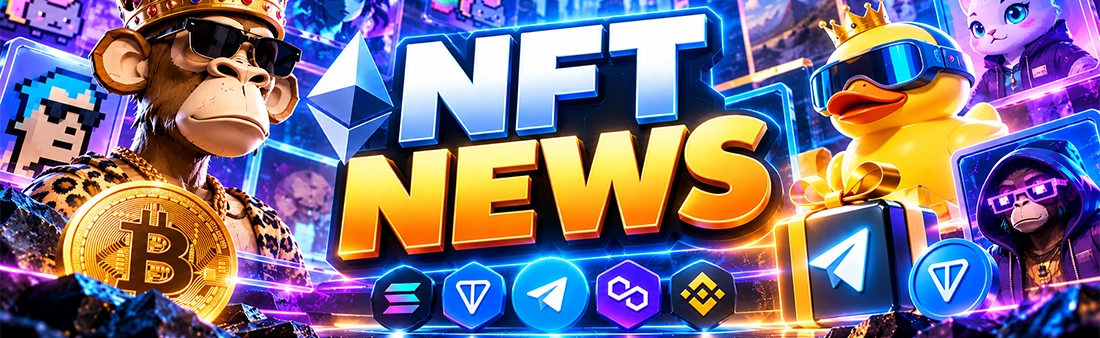
NFT News — Latest NFT Market Updates, Telegram Gifts, Crypto Collectibles & Web3
Explore the world of NFT news, digital collectibles, blockchain gaming, crypto art, Telegram Gifts, and Web3 technology. NFTUA is an English-language NFT news destination on Telegram, bringing together developments from major blockchain ecosystems and emerging digital asset communities.
From Ethereum NFTs and Bitcoin Ordinals to Solana, TON, GRAM, Polygon, Base, BNB Chain, Avalanche, and other networks, NFTUA covers topics relevant to collectors, traders, creators, gamers, and blockchain enthusiasts.
Follow NFTUA — NFT News on Telegram
The NFT industry is much broader than digital artwork. Non-fungible tokens can represent collectibles, gaming items, memberships, digital credentials, and other unique blockchain-based assets.
This guide explores the major areas of NFT news, explains important market concepts, and introduces the ecosystems shaping the future of digital ownership.
Latest NFT News and Digital Collectible Trends
The NFT market continues to evolve through new blockchain technologies, marketplace competition, digital collectible launches, and changing consumer interests.
Important developments include collection announcements, trading activity, creator initiatives, gaming integrations, regulatory changes, and security incidents.
NFT market coverage includes trading volume, floor prices, liquidity, collection activity, and changes in market sentiment.
Understanding these indicators can help collectors distinguish genuine demand from short-term speculation.
New projects appear across multiple blockchain ecosystems, offering digital artwork, collectibles, gaming items, memberships, and community experiences.
Collectors often examine supply, artwork, development activity, creator reputation, utility, and community history before participating.
Marketplaces regularly introduce new trading tools, supported networks, fee structures, creator features, and security improvements.
These developments can affect how digital collectibles are discovered, purchased, and sold.
Smart contracts, token standards, blockchain scalability, wallet infrastructure, and interoperability continue to influence NFT applications.
Ethereum NFT News — Digital Art, Collections and Marketplaces
Ethereum remains one of the major ecosystems for NFTs, supporting digital art, collectibles, blockchain applications, and tokenized communities.
Well-known collections include CryptoPunks, Bored Ape Yacht Club, Pudgy Penguins, Art Blocks, Azuki, and other projects.
They represent different approaches to digital identity, community building, creative expression, and collectible ownership.
Ethereum NFTs are supported by compatible marketplaces, including platforms such as OpenSea, Blur, and Magic Eden.
Marketplace features, fees, and supported assets may change over time.
Ethereum scaling technologies help support blockchain applications that require lower transaction costs or greater throughput.
Relevant ecosystems include Base, Arbitrum, Optimism, and other Ethereum-compatible networks.
Bitcoin NFT News — Ordinals, Inscriptions and Digital Artifacts
Bitcoin Ordinals expanded interest in digital collectibles associated with the Bitcoin blockchain.
Ordinals provide a method of identifying individual satoshis, while inscriptions can associate content with them.
Collectors follow new inscriptions, historical artifacts, wallet developments, and marketplace activity.
Bitcoin-based collectible projects can feature artwork, historical inscriptions, and other digital artifacts.
Their technical structure differs from conventional Ethereum NFT standards.
Runes are fungible tokens rather than NFTs, but their ecosystem overlaps with Ordinals through infrastructure, marketplaces, wallets, and communities.
Understanding this distinction is important when following Bitcoin digital asset news.
Solana NFT News — Collections, Trading and Gaming
Solana supports digital collectibles, gaming projects, creator applications, and NFT marketplaces.
Solana-based projects include community collectibles, gaming items, artwork, and digital membership experiences.
Platforms such as Magic Eden and Tensor have contributed to the development of Solana NFT trading.
Marketplace competition can influence trading tools, user experience, fees, and available services.
Compressed NFTs use specialized technologies designed to make large-scale digital asset creation more efficient.
Applications may include gaming assets, event collectibles, digital rewards, and large consumer campaigns.
TON NFT News — Blockchain Collectibles and Telegram Ecosystem
TON, or The Open Network, supports blockchain applications, decentralized services, and digital assets.
Its ecosystem is particularly relevant to users interested in Telegram-integrated applications and collectible technologies.
TON-based projects include artwork, digital collectibles, community assets, and blockchain applications.
Compatible marketplaces support the discovery and trading of eligible digital assets.
Users should verify marketplace compatibility, wallet requirements, fees, and transaction conditions.
Toncoin is the native cryptocurrency of the TON blockchain and is used for network functions such as transaction fees.
Toncoin should not be confused with other tokens associated with the broader TON ecosystem.
Telegram Gifts News — Collectible Gifts, Rarity and Marketplaces
Telegram collectible gifts are one of the central topics covered by NFTUA.
Digital gifts have attracted collectors interested in visual attributes, scarcity, ownership features, and marketplace activity.
Relevant news includes new gift releases, collectible upgrades, design variations, supply characteristics, and supported functionality.
Collectors may search for unusual combinations of models, backgrounds, symbols, and other attributes.
However, rarity does not automatically guarantee a high resale price.
Specialized trading platforms and applications may support eligible Telegram collectible gifts.
Important developments include trading features, marketplace fees, security improvements, and changes in supported assets.
Telegram Stars are used for certain digital transactions within Telegram.
They are different from blockchain cryptocurrencies such as Toncoin and GRAM.
Collectors may examine supply, listed prices, completed transactions, unique holders, rarity attributes, and liquidity when evaluating collectible gifts.
An advertised listing price does not necessarily represent a price at which an item can actually be sold.
GRAM Crypto News — TON Ecosystem Tokens and Digital Assets
GRAM is a cryptocurrency token associated with the TON ecosystem.
GRAM and Toncoin are separate assets with different characteristics and market behavior.
Coverage may include ecosystem announcements, trading activity, liquidity, exchange availability, and community developments.
Some digital collectible communities may use cryptocurrencies for payments, incentives, or other supported functions.
GRAM compatibility depends on the particular platform or application.
Token prices can be influenced by liquidity, supply, trading conditions, market sentiment, and broader cryptocurrency developments.
Market commentary should not be interpreted as a guaranteed investment outcome.
Polygon supports digital collectibles, blockchain applications, gaming projects, and tokenization infrastructure.
Relevant news includes new collections, marketplace integrations, creator tools, and Web3 gaming developments.
Base is an Ethereum Layer 2 network supporting decentralized applications and digital collectibles.
Its ecosystem includes onchain artwork, creator platforms, social applications, and emerging NFT projects.
BNB Chain supports NFT projects, decentralized applications, and blockchain gaming infrastructure.
Developments may include collection launches, gaming integrations, marketplace changes, and new Web3 applications.
Avalanche supports blockchain applications, gaming ecosystems, and digital assets.
NFT-related developments include gaming collectibles, infrastructure improvements, creator projects, and emerging applications.
Emerging NFT Blockchains and Multichain Ecosystems
NFT innovation extends beyond the largest networks.
Sui supports digital asset applications, gaming projects, and programmable ownership models.
Aptos provides infrastructure for digital collectibles and decentralized applications.
Tezos has an established digital art community, including artists working with generative artwork and other creative formats.
Flow has supported digital collectible, entertainment, and consumer-oriented blockchain applications.
Ronin is associated with blockchain gaming and digital assets used in gaming communities.
Immutable-related technologies focus on blockchain gaming infrastructure, developer tools, and digital assets.
These Ethereum scaling ecosystems support applications that can include NFTs, gaming assets, and creator projects.
NFT Marketplace News — OpenSea, Blur, Magic Eden and More
NFT marketplaces provide infrastructure for discovering, listing, purchasing, and selling digital collectibles.
Trading fees can affect transaction costs and marketplace competition.
Royalty policies influence how creators may receive compensation from secondary-market activity.
Some platforms support collectibles across multiple networks, although functionality and available assets differ.
Users should verify official websites, smart contract permissions, wallet connections, and transaction details before making purchases.
Upcoming NFT Drops and New NFT Projects
NFT drops introduce new collections to blockchain communities.
Announcements may include minting schedules, collection supply, artwork, eligibility requirements, and project roadmaps.
Minting refers to creating or issuing blockchain-based tokens according to a project's technical design.
Some projects offer early or restricted mint access to eligible wallets.
Allowlist participation does not guarantee investment returns.
Some projects offer NFTs without a purchase price, although transaction fees or other costs may still apply.
Before participating, examine the official website, smart contract details, team transparency, community history, and security risks.
Blockchain gaming connects interactive entertainment with digital assets and decentralized infrastructure.
Some games represent characters or other assets through NFTs.
Their actual functionality depends on the game and supported systems.
Gaming NFTs may represent cosmetic items, equipment, characters, land, or other in-game assets.
GameFi combines blockchain gaming with token-based economic models.
Play-to-earn systems may provide rewards under certain conditions, but financial outcomes are uncertain and may change over time.
Specialized marketplaces may support the trading of compatible gaming assets.
NFTUA follows the intersection between blockchain technology and gaming, while traditional gaming news, PlayStation, Xbox, major releases, and the wider video game industry can also be explored on GamesUA.
NFT Art News — Digital Artists, AI Art and Generative Collections
NFT technology offers additional ways for creators to distribute and collect digital works.
Generative artwork uses algorithms or programmed systems to produce visual compositions.
Artificial intelligence can assist with illustration, animation, design, and collectible creation.
Important issues include copyright, authorship, training data, and commercial usage rights.
Photography can be represented through NFT systems, although token ownership does not automatically transfer copyright.
Some NFT projects feature animation, interactive elements, or changing visual characteristics.
NFT Technology News — Smart Contracts and Digital Ownership
NFT infrastructure continues to evolve through new standards and blockchain applications.
ERC-721 is widely used for unique Ethereum-compatible tokens.
ERC-1155 supports multiple token types within a single smart contract system.
Dynamic NFTs can change certain characteristics according to programmed rules or external inputs.
Cross-chain technologies aim to connect digital assets across different blockchain ecosystems.
NFT metadata describes characteristics associated with a token.
The storage and availability of related content depend on the project's technical architecture.
Blockchain tokens can represent certain rights or interests connected with real-world assets.
Not all tokenized assets are NFTs, and legal ownership depends on the specific arrangement.
NFT Market Analysis — Floor Prices, Volume and Liquidity
Understanding NFT market conditions requires examining multiple indicators.
Trading volume measures transaction activity over a defined period.
Reported figures may vary by data provider and can be affected by wash trading.
A floor price generally represents the lowest listed price within a collection on a particular marketplace.
It does not guarantee that all NFTs in the collection can be sold at that price.
Liquidity describes how easily assets can be sold without substantially affecting market prices.
Low liquidity can make NFT valuations uncertain.
Collection supply and ownership concentration can influence market dynamics.
Sales rankings may reflect transaction values, trading activity, or other metrics depending on the methodology used.
NFT markets can be affected by cryptocurrency prices, investor sentiment, technology developments, cultural trends, and changing consumer demand.
NFT collectors face technical, financial, and security risks.
Fraudulent websites and messages may attempt to steal wallet credentials or obtain malicious transaction approvals.
Scammers sometimes impersonate projects or offer fake rewards to attract users.
Unverified smart contracts can introduce security risks.
Never share private keys or recovery phrases.
Verify websites and transaction details before connecting wallets or approving requests.
Wash trading, artificial volume, and misleading listings can distort apparent market demand.
NFT Regulation News — Copyright, Taxes and Digital Asset Policies
NFT-related regulations vary between countries.
Important issues include taxation, consumer protection, copyright, financial regulation, digital asset classification, and marketplace compliance.
Ownership of an NFT does not automatically provide intellectual property rights to the associated content.
The digital asset industry moves quickly, and not every announcement is accurate.
Check official project websites, verified communication channels, and relevant blockchain records.
Older NFT information may no longer reflect current market conditions, pricing, or platform features.
Different data providers may report different trading volumes, rankings, and market indicators.
Confirmed developments should be distinguished from opinions, rumors, speculation, and forecasts.
Why Follow NFTUA?
NFTUA focuses on a broad range of digital collectible and Web3 topics rather than a single blockchain.
Its coverage areas include:
- Ethereum NFTs;
- Bitcoin Ordinals;
- Solana collectibles;
- TON;
- Telegram Gifts;
- GRAM;
- Polygon;
- Base;
- BNB Chain;
- Avalanche;
- NFT marketplaces;
- blockchain gaming;
- NFT art;
- emerging Web3 technologies.
The channel is intended for people who want to follow NFT developments, discover new projects, and better understand digital collectible ecosystems.
Frequently Asked Questions About NFT News
NFT news can be found through blockchain publications, official project announcements, marketplaces, and specialized communities such as NFTUA.
Yes. Telegram collectible gifts, rarity attributes, marketplace developments, and related ecosystem news are among its main topics.
Topics include Ethereum, Bitcoin, Solana, TON, Polygon, Base, BNB Chain, Avalanche, and other blockchain ecosystems.
No. They use different technical architectures, although both can be associated with digital collectibles.
No. GRAM is a separate token, while Toncoin is the native cryptocurrency of TON.
It is generally the lowest listed price of an NFT in a collection on a particular marketplace at a given time.
Yes. NFT markets can be volatile, especially when trading activity and liquidity are limited.
No. NFTs can also represent gaming assets, memberships, credentials, collectibles, and other unique digital items.
New collections are announced through project channels, marketplaces, creators, and NFT news communities.
Yes. NFT markets involve price volatility, liquidity risks, scams, technical vulnerabilities, and uncertain demand.
No. NFTUA is an information and news channel, not a service that guarantees financial returns.
Follow NFTUA — NFT News, Telegram Gifts and Web3 Updates
The NFT ecosystem continues to develop across blockchain networks, digital marketplaces, gaming platforms, and creative communities.
Whether you follow Ethereum NFT collections, Bitcoin Ordinals, Solana marketplaces, TON digital assets, Telegram collectible gifts, GRAM, GameFi, NFT art, or emerging Web3 technologies, NFTUA brings these subjects together in one Telegram channel.
Discover NFT market developments, explore new digital collectible projects, and follow the evolution of blockchain technology.
NFT and cryptocurrency content is provided for informational purposes only and should not be considered personalized financial or investment advice. Digital assets can be volatile and may involve a risk of partial or complete financial loss.